

Iran launched an attack on an American military base in Qatar on Monday in retaliation for U.S. strikes on three critical nuclear sites.
A U.S. official said that Al Udeid Air Base, the largest American installation in the Middle East, was attacked by short-range and medium-range ballistic missiles. “At this time, there are no reports of U.S. casualties,” a U.S. defense official told The Intercept. “We are monitoring this situation closely and will provide more information as it becomes available.”
A Qatari official confirmed that no casualties occurred due to the attack.
The Qatari official said that Al Udeid Air Base, which it shares with the United States, had been “evacuated” prior to the attack and that all “necessary measures were taken to ensure the safety of the base’s personnel, including members of the Qatari Armed Forces, friendly forces, and others.”
Iran said the strikes in Qatar matched the number of bombs dropped by the United States on its nuclear sites over the weekend, signaling its likely desire to save face at home and deescalate abroad.
Iran announced the attack on state television. A caption on screen called it “a mighty and successful response” to “America’s aggression,” according to The Associated Press.
The Qatari official denounced the Iranian attack and blamed Israel for setting off the cycle of violence in the region. Trump joined Israel’s war against Iran on Saturday, attacking Iranian nuclear facilities at Fordow, Natanz, and Esfahan — a decision that experts say may lead to a new U.S. forever war in the Middle East.
“We express the State of Qatar’s strong condemnation of the attack on Al Udeid Air Base by the Iranian Revolutionary Guard Corps, and consider it a flagrant violation of the State of Qatar’s sovereignty and airspace, as well as of international law and the United Nations Charter,” the official told The Intercept, adding that Qatar was “among the first countries to warn against the consequences of Israeli escalation in the region.”
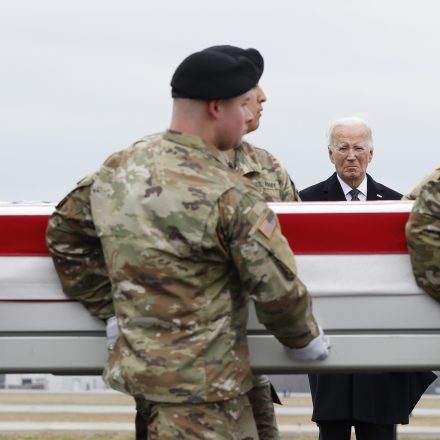
More than 40,000 U.S. active-duty military personnel and civilians working for the Pentagon are deployed across the Middle East. In recent years, the U.S. has used more than 60 bases, garrisons, or shared foreign facilities in the region. These sites range from small combat outposts to massive air bases in 13 countries: Bahrain, Egypt, Iraq, Israel, Jordan, Kuwait, Lebanon, Oman, Qatar, Saudi Arabia, Syria, the United Arab Emirates, and Yemen.
U.S. troops in the Middle East have come under attack close to 400 times, at a minimum, since October 2023 in response to the U.S.-supported Israeli war on Gaza.
U.S. Navy vessels in the region have been the most frequent target, coming under attack 174 times since October 2023, Central Command told The Intercept. There have also been “about 200” attacks on U.S. bases in the region since the Gaza war began, Pentagon spokesperson Patricia Kreuzberger told The Intercept last month. This amounted to roughly one attack every 1.5 days. This includes more than 100 attacks on U.S. outposts in Syria and a lesser number in Iraq and Jordan. A January 2024 drone attack on Tower 22, a facility in the latter country, killed three U.S. troops.
Predominantly led by Iranian-backed militias and the Iranian-allied Houthi government in Yemen, the strikes include a mix of one-way attack drones, rockets, mortars, and ballistic missiles fired at fixed bases and U.S. warships across the region.
Trump struck a ceasefire deal with the Houthis in May. Prior to the U.S. attacks on Saturday, the Houthis threatened to again target U.S. ships in the Red Sea if Washington joined Israel’s attacks on Iran.
IT’S EVEN WORSE THAN WE THOUGHT.
What we’re seeing right now from Donald Trump is a full-on authoritarian takeover of the U.S. government.
This is not hyperbole.
Court orders are being ignored. MAGA loyalists have been put in charge of the military and federal law enforcement agencies. The Department of Government Efficiency has stripped Congress of its power of the purse. News outlets that challenge Trump have been banished or put under investigation.
Yet far too many are still covering Trump’s assault on democracy like politics as usual, with flattering headlines describing Trump as “unconventional,” “testing the boundaries,” and “aggressively flexing power.”
The Intercept has long covered authoritarian governments, billionaire oligarchs, and backsliding democracies around the world. We understand the challenge we face in Trump and the vital importance of press freedom in defending democracy.
We’re independent of corporate interests. Will you help us?
IT’S BEEN A DEVASTATING year for journalism — the worst in modern U.S. history.
We have a president with utter contempt for truth aggressively using the government’s full powers to dismantle the free press. Corporate news outlets have cowered, becoming accessories in Trump’s project to create a post-truth America. Right-wing billionaires have pounced, buying up media organizations and rebuilding the information environment to their liking.
In this most perilous moment for democracy, The Intercept is fighting back. But to do so effectively, we need to grow.
That’s where you come in. Will you help us expand our reporting capacity in time to hit the ground running in 2026?
We’re independent of corporate interests. Will you help us?

I’M BEN MUESSIG, The Intercept’s editor-in-chief. It’s been a devastating year for journalism — the worst in modern U.S. history.
We have a president with utter contempt for truth aggressively using the government’s full powers to dismantle the free press. Corporate news outlets have cowered, becoming accessories in Trump’s project to create a post-truth America. Right-wing billionaires have pounced, buying up media organizations and rebuilding the information environment to their liking.
In this most perilous moment for democracy, The Intercept is fighting back. But to do so effectively, we need to grow.
That’s where you come in. Will you help us expand our reporting capacity in time to hit the ground running in 2026?
We’re independent of corporate interests. Will you help us?
Contact the author:

Related

U.S. Intel Says Iran Isn’t a Nuclear Threat. Israel Wants the U.S. to Bomb It Anyway.
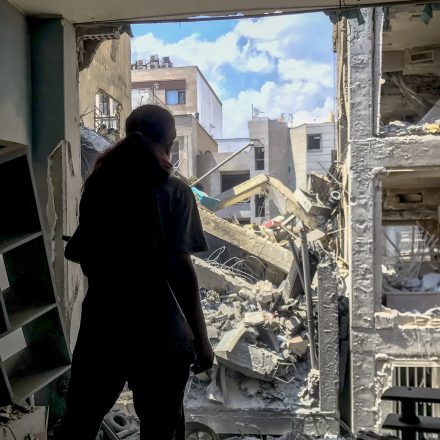
Netanyahu and Trump Are Trying to Have It All
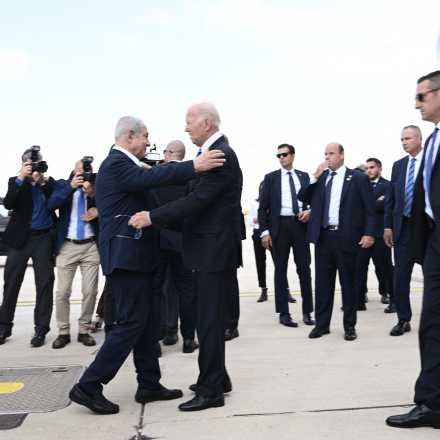
Israel and Israel Alone Kicked Off This Escalation — In a Bid to Drag U.S. Into War With Iran
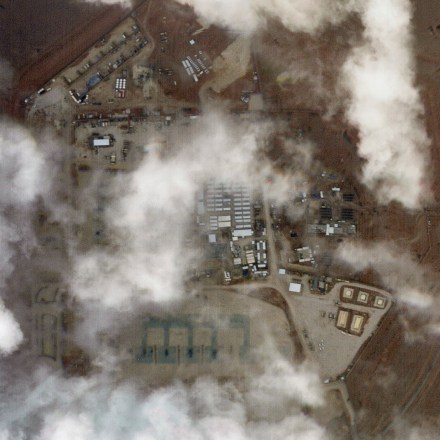
U.S. Troops in Jordan Killed in Retaliation for American Support of Israel
Latest Stories

License to Kill
CIA Was Behind Venezuela Drone Strike, Source Says
The December 24 drone strike in Venezuela is the latest in a long tradition of CIA interventions in Latin America — which often lead to destabilization and blowback.

Midterms 2026
AIPAC Is Retreating From Endorsements and Election Spending. It Won’t Give Up Its Influence.
The lobbying group is taking a quieter approach this midterms cycle, but it’s still seeking to keep Congress in Israel’s pocket.

License to Kill
Did Trump Just Confess to Attacking Venezuela?
“They have a big plant or a big facility where the ships come from. Two nights ago, we knocked that out. We hit them very hard.”